
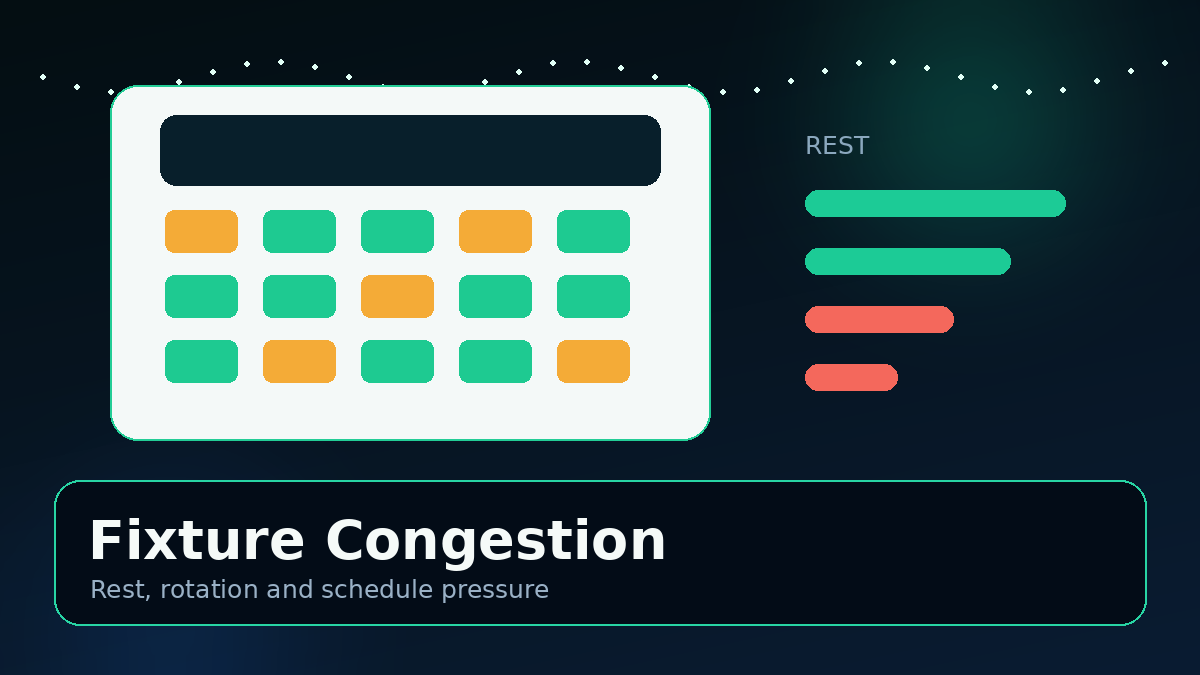
A busy schedule does not automatically make a team a bad bet. The important question is how the schedule changes player availability, tactical intensity and the priority of the upcoming match.
Count recovery time accurately
The calendar date can hide short recovery windows caused by evening kick-offs, travel and early starts. Consider the actual hours between matches and whether the team returned from a long trip.
Estimate rotation by role
Squad depth is not evenly distributed. A team may have several forwards but no reliable replacement for a holding midfielder or full-back. Review which roles are likely to be rotated and how that changes the system.
Consider match priority
A league match before a decisive cup tie may receive a different lineup or level of intensity. Managers can also prioritise survival, qualification or a local rivalry depending on the stage of the season.
- Travel distance and return time.
- Likely rotation by position.
- Minutes played by key players.
- Importance of the next fixture.
- Depth available in the affected roles.
Practical takeaways
- Measure recovery in hours, not calendar labels.
- Analyse rotation by position and tactical role.
- Check the competitive priority of both teams.